

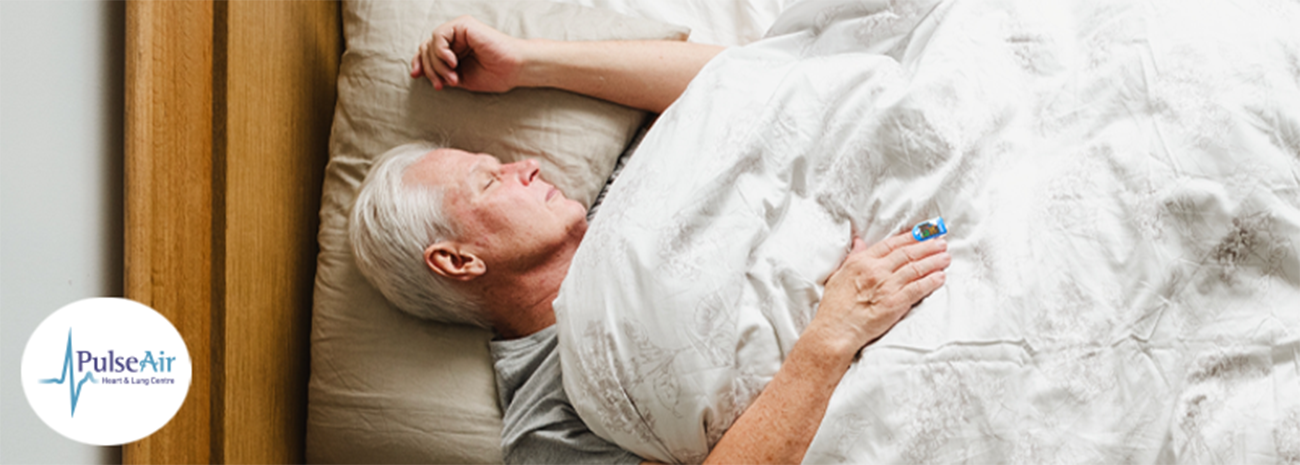
You wake up tired even after what should’ve been a full night’s sleep. Maybe you have a dull headache most mornings, find yourself relying on extra coffee to get through the day, or struggle to focus on simple tasks. Some people even wake suddenly feeling short of breath and wonder what happened.
Symptoms like these can have many different causes, but for some people, changes in breathing and oxygen levels during sleep may be part of the picture.
Morning headaches, fatigue, brain fog, and disrupted sleep don’t confirm that your oxygen is low. Understanding what to watch for and which tests are available can help you have a more informed conversation with your healthcare provider.
At a Glance: What to Know About Oxygen Levels During Sleep
- Blood oxygen levels can drop during sleep in some people.
- Common warning signs may include morning headaches, fatigue, brain fog, and poor sleep quality.
- Sleep apnea is one possible cause of overnight oxygen changes.
- Nocturnal oximetry can record oxygen saturation while you sleep.
- Sleep studies provide more detailed information about breathing patterns and sleep-related events.
- A healthcare provider can determine which testing may be appropriate.
Jump to a Section
- Can Oxygen Levels Drop During Sleep?
- Signs of Overnight Oxygen or Breathing Changes
- What Causes Low Oxygen Levels During Sleep?
- What Is Nocturnal Oximetry?
- How Sleep Testing Can Provide More Answers
- Why Oxygen Monitoring Alone Doesn't Diagnose Sleep Apnea
- When Should You Talk to a Healthcare Provider
- Frequently Asked Questions
1Can Oxygen Levels Drop During Sleep?
Yes, blood oxygen levels can change while you sleep.
As your body moves through different stages of sleep, breathing patterns naturally change. In some people, a sleep, lung, heart, or muscle-and-nerve condition may cause oxygen levels to drop more than expected or remain low for part of the night.
Healthcare professionals call a drop in oxygen during sleep nocturnal oxygen desaturation. Whether it's concerning depends on how low the oxygen is, how often it happens, how long it lasts, and what's causing it.
Keep in Mind: Because these changes happen while you’re asleep, you may not realize anything is different until night-time or daytime symptoms begin affecting your routine.
2Signs Your Oxygen Levels or Breathing May Be Changing Overnight
Changes in blood oxygen levels aren’t always obvious. Symptoms may appear during the night or after you wake, but they can’t identify the cause on their own.
Morning Headaches
A headache that's waiting for you when you get out of bed can be frustrating, especially when it happens regularly.
Recurring morning headaches may occur with sleep-related breathing problems, including obstructive sleep apnea. However, headaches can also be related to migraine, dehydration, medication effects, teeth grinding, poor sleep, or another health condition.
Related Reading: Could Sleep Apnea Be Causing Your Morning Headaches?
Excessive Daytime Fatigue
You may spend enough time in bed and still wake feeling exhausted. Breathing interruptions and repeated brief awakenings can interfere with continuous, restorative sleep.
Daytime sleepiness may also be related to medication, insufficient sleep, stress, pain, shift work, or another medical or sleep condition.
Related Reading: Why Am I Still Tired After 8 Hours of Sleep?
Poor Sleep Quality
Not everyone experiences symptoms the same way.
Some people notice that they:
- Wake up frequently during the night
- Toss and turn
- Sleep lightly
- Struggle to stay asleep
- Wake up feeling unrefreshed
You may not remember waking up, but disrupted sleep can still affect how rested you feel the next day.
Waking Short of Breath
Suddenly waking up gasping or waking up short of breath can be unsettling.
A single episode doesn’t confirm a sleep disorder, but recurring symptoms should be discussed with your healthcare provider, particularly when they occur with loud snoring, witnessed breathing pauses, fatigue, chest symptoms, or morning headaches.
Brain Fog and Difficulty Concentrating
Sleep affects much more than energy levels.
Poor-quality sleep can affect attention, memory, and mental energy. Some people notice brain fog, slower thinking, difficulty concentrating, or reduced productivity.
These symptoms don’t prove that oxygen levels are low, but they’re useful information to share during an assessment.
Related Reading: Experiencing Brain Fog? Low Oxygen, Poor Sleep, or Your Lung Health Could Be the Cause
3What Causes Low Oxygen Levels During Sleep?
There isn’t one explanation for low oxygen levels overnight.
Potential causes may include:
• Obstructive sleep apnea
• Other sleep-related breathing disorders
• COPD or another chronic lung condition
• Certain heart conditions
• Neuromuscular conditions that affect breathing
• Obesity hypoventilation
• Some medications that suppress or slow breathing
A combination of medical conditions
Obstructive sleep apnea causes repeated pauses or reductions in breathing when the upper airway becomes blocked during sleep. These events may result in recurring oxygen drops, but an oxygen change alone doesn’t establish that sleep apnea is the cause.
Important: Low oxygen during sleep can occur for several different reasons. Determining the underlying cause often requires additional assessment and testing.
4What Is Nocturnal Oximetry?
Nocturnal oximetry is an overnight test that records blood oxygen saturation while you sleep, usually using a sensor placed on your finger.
The recording may help your healthcare provider see:
- Your oxygen saturation pattern overnight
- Whether oxygen readings decrease during sleep
- How often noticeable oxygen changes occur
- How long your oxygen level remains below a particular range
- Your pulse rate during the recording
Nocturnal oximetry is non-invasive and may be completed at home when ordered by a healthcare provider. The results need to be interpreted within the context of your symptoms, medical history, existing conditions, and other testing.
Keep in Mind: Nocturnal oximetry can show oxygen patterns overnight, but the results are only one piece of the overall clinical picture.
A home pulse oximeter used for occasional spot checks isn’t the same as a medically ordered overnight recording. Consumer-device readings may also be affected by movement, circulation, cold hands, nail products, device fit, and other factors.
5How Sleep Testing Can Provide More Answers
Sleep testing collects additional information about breathing and other events during the night. The appropriate test depends on your symptoms, medical history, and healthcare provider’s recommendation.
Home Sleep Testing
Home sleep testing allows eligible patients to complete testing in their own home.
Depending on the test used, the study may record airflow, breathing effort, oxygen saturation, pulse, and respiratory events. Home sleep testing isn’t suitable for every person or every suspected sleep condition.
Laboratory Sleep Testing
Laboratory sleep testing provides a more comprehensive assessment in a monitored sleep environment.
A laboratory study may record brain activity, eye movement, breathing, oxygen saturation, heart rate and rhythm, body movement, and other information. It may be recommended when a more detailed evaluation is needed.
More Comprehensive Testing: Laboratory sleep testing gathers significantly more information than overnight oxygen monitoring alone and may be recommended when a more complete assessment is needed.
Sleep Apnea Assessment and Treatment
If testing identifies obstructive sleep apnea, your healthcare team can discuss appropriate treatment based on your diagnosis and clinical needs.
Related Reading: Sleep Apnea Education and Treatment.
6Why Oxygen Monitoring Alone Doesn't Diagnose Sleep Apnea
A low overnight oxygen reading doesn’t automatically mean that sleep apnea is the cause.
Nocturnal oximetry can identify changes in oxygen saturation, but it doesn’t directly measure every airflow reduction, breathing effort, sleep stage, or awakening needed to fully evaluate obstructive sleep apnea.
Oxygen levels may also change because of a lung condition, heart condition, medication effect, hypoventilation, or another medical concern.
A normal oxygen pattern doesn’t necessarily rule out every sleep disorder, either. Your healthcare provider will determine whether oximetry, home sleep testing, laboratory sleep testing, or another assessment is appropriate.
Important: Overnight oxygen monitoring can provide useful information, but it cannot diagnose obstructive sleep apnea by itself. Additional testing may be needed to identify the underlying cause of symptoms or oxygen changes.
7When Should You Talk to a Healthcare Provider?
Consider speaking with a healthcare provider if you experience:
- Frequent morning headaches
- Ongoing daytime sleepiness
- Loud snoring
- Witnessed pauses in breathing
- Restless or disrupted sleep
- Waking up gasping or short of breath
- Persistent difficulty concentrating
- Worsening symptoms from a heart or lung condition
- Sleep symptoms that affect your work, driving, or daily life
For patients in Edmonton and throughout Alberta, your family physician or primary healthcare provider can determine whether nocturnal oximetry, home sleep testing, laboratory sleep testing, or another evaluation may be appropriate.
Seek emergency medical attention immediately: Call 9-1-1 for severe or sudden shortness of breath, chest pain, blue or grey colouring, fainting, new confusion, or another medical emergency.
Get More Information About Your Sleep Health
If ongoing fatigue, morning headaches, or breathing concerns are affecting your routine, ask your healthcare provider whether a sleep assessment may be appropriate.
Contact PulseAir View Sleep-Testing Options
This information is intended for general education and isn’t a substitute for personalized medical advice, diagnosis, or treatment.
Frequently Asked Questions
What oxygen level is considered low during sleep?
There isn’t one target that applies to everyone. A healthcare provider interprets overnight oxygen results according to the person’s health history, symptoms, baseline oxygen level, sleep-test findings, and other clinical information.
Can sleep apnea cause oxygen levels to drop?
Yes. Obstructive sleep apnea may cause repeated reductions or pauses in breathing that result in oxygen desaturation. However, sleep apnea is only one possible cause of overnight oxygen changes.
Can I test my oxygen levels at home?
A healthcare provider may order home-based overnight oximetry or a home sleep test. A consumer pulse oximeter used for spot checks isn’t the same as a medically ordered overnight study.
When should I ask about a sleep study?
Discuss sleep testing with your healthcare provider if you experience loud snoring, witnessed pauses in breathing, morning headaches, excessive daytime sleepiness, waking short of breath, or ongoing unrefreshing sleep.
Can low oxygen cause morning headaches?
Changes in breathing and oxygen or carbon dioxide levels during sleep may contribute to morning headaches in some people. Headaches have many possible causes, so further evaluation may be needed.
Is overnight oxygen monitoring the same as a sleep study?
No. Overnight oximetry primarily records oxygen saturation and pulse. A sleep study gathers additional information about breathing patterns and sleep-related events, depending on the type of study performed.